
 ChatGPT
 Perplexity
 Claude
 Gemini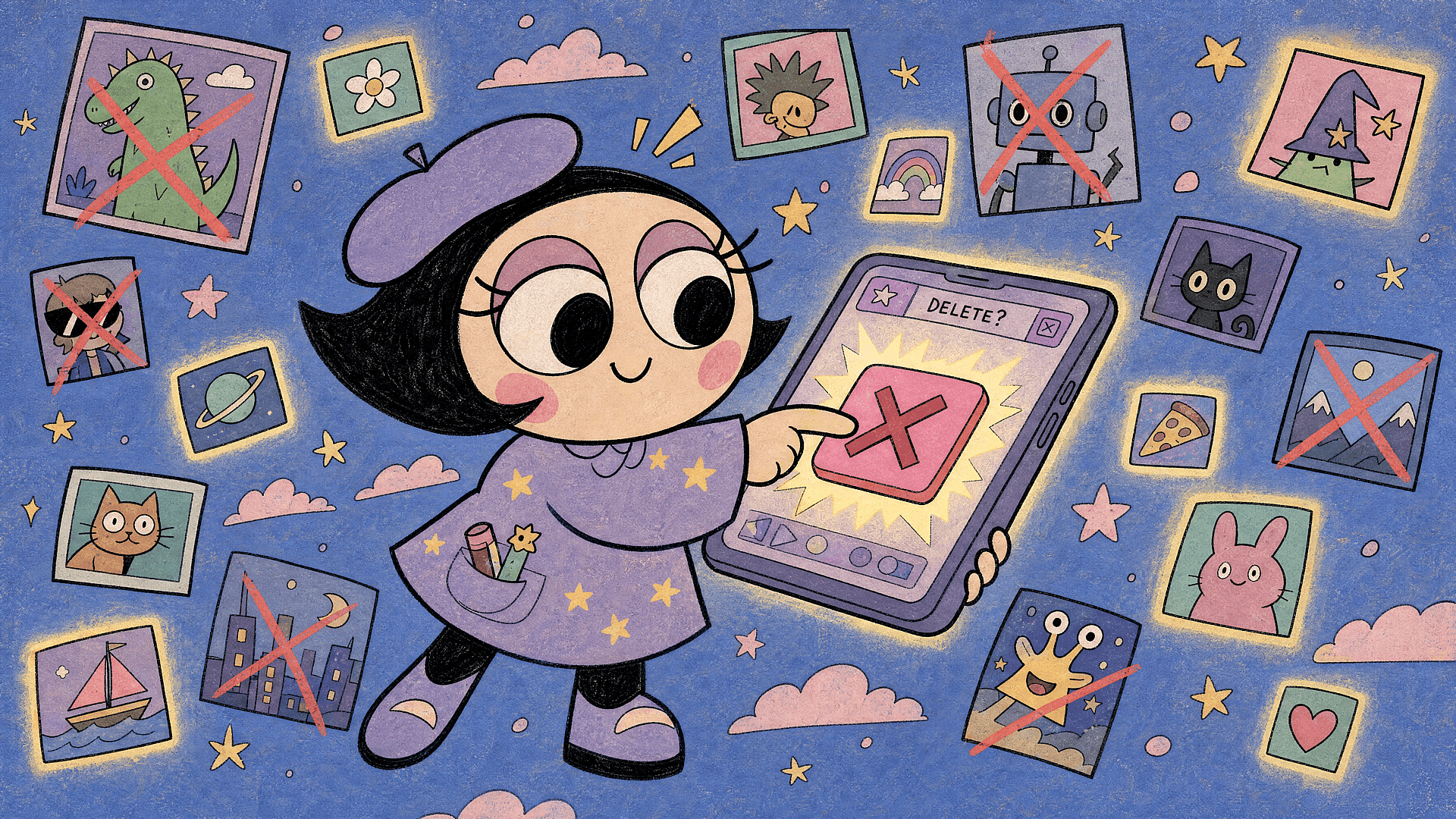
There is a version of creative development that gets talked about constantly: consume voraciously, collect references obsessively, surround yourself with work you love until your own work starts to reflect it. Build a mood board. Fill a swipe file. Study the people you admire. This advice is not wrong, but it is incomplete, because it points you toward your enthusiasms and asks you to build a creative identity from them, and enthusiasm alone is one of the least reliable guides to a genuine point of view.
Enthusiasm is diffuse, because it wants to say yes to too many things. It's moved by quality wherever it finds it, which means it is moved by contradictory things, incompatible aesthetics, ideas that can't coexist in the same body of work. Every creative person who has spent time carefully curating a collection of things they love has also experienced the paralysis that comes with it: the references pull in ten directions at once, and instead of clarifying your aesthetic, the collection just reflects the breadth of your taste rather than the specificity of your vision.
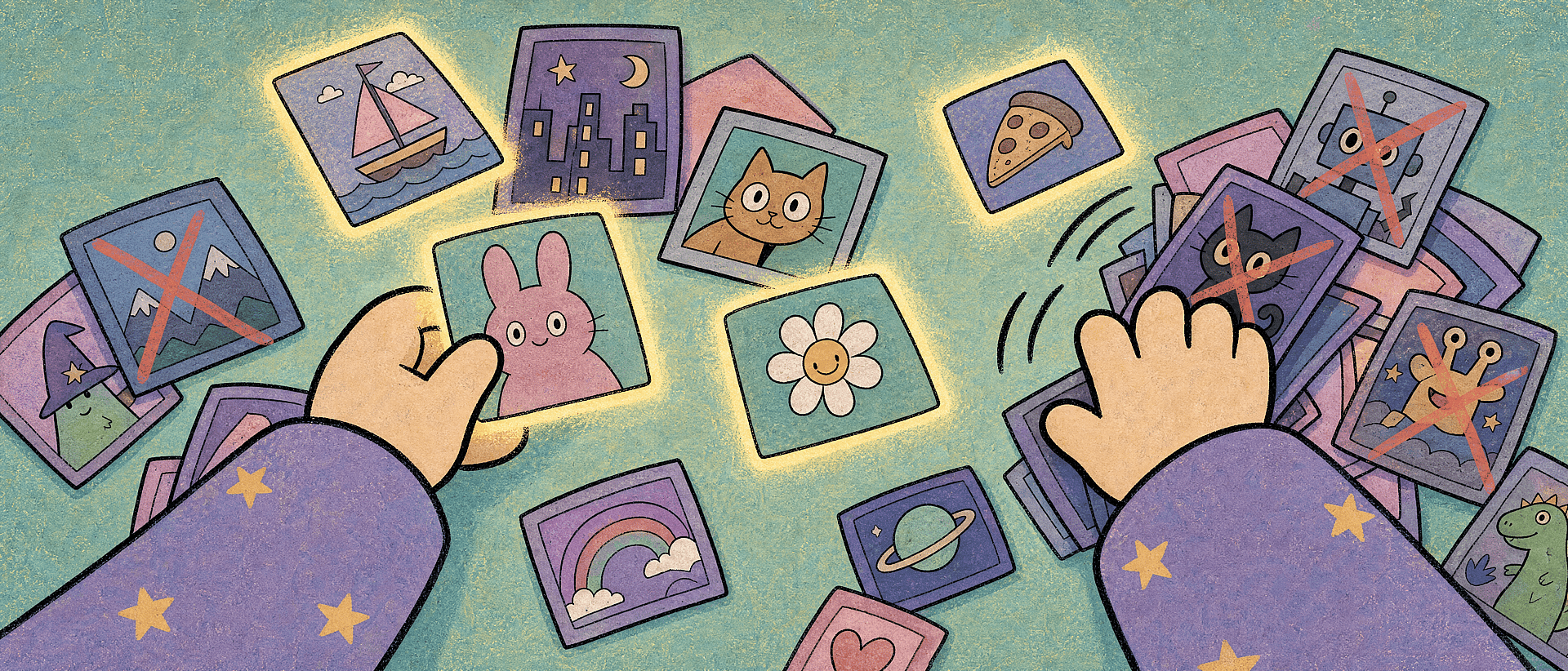
The thing that actually sharpens a point of view is refusal, because the "no" is more precise than the "yes," and often more revealing. When you encounter work that makes you recoil even slightly, not because it's bad but because it's fundamentally not you, you are getting closer to the shape of your actual aesthetic identity than any amount of inspiration gathering will bring you.
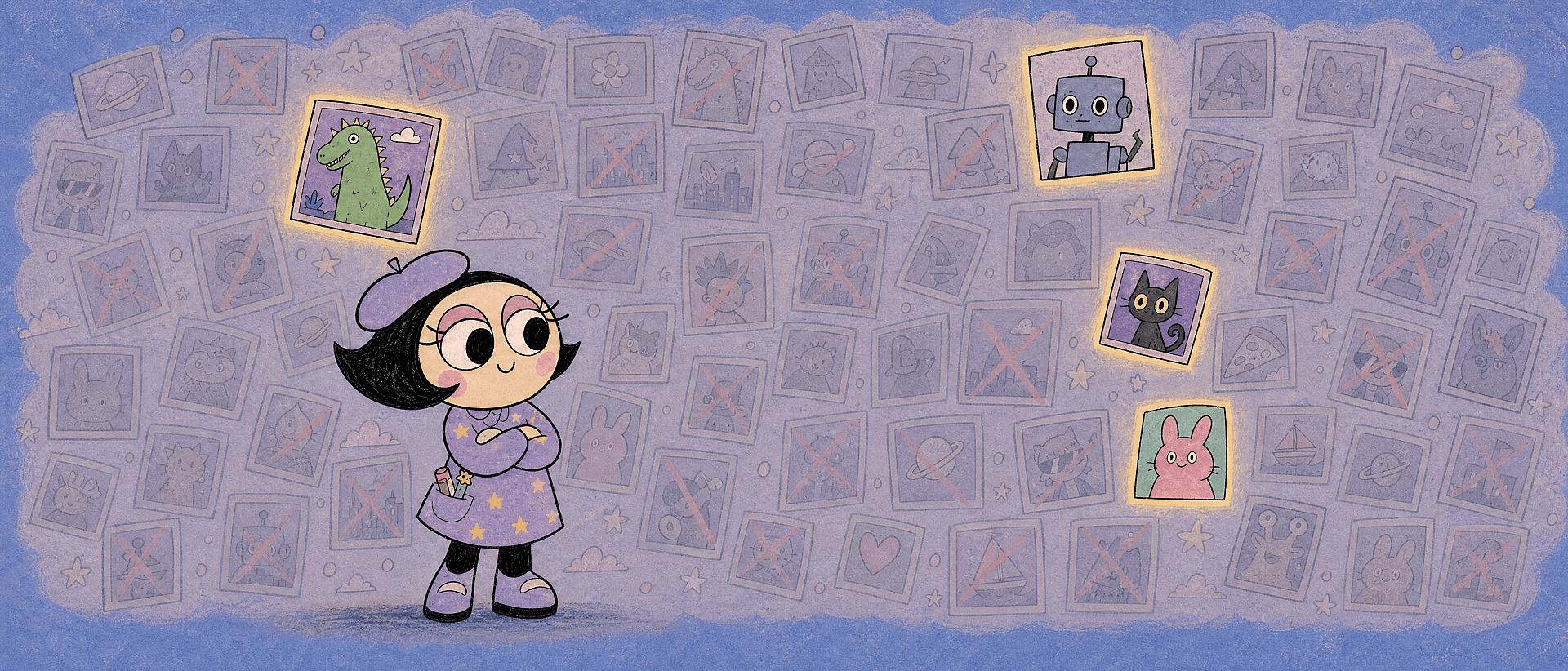
Think about the creatives whose work you can identify instantly across mediums and years. What makes them recognizable is not just what they chose to include but what they conspicuously excluded: the designer who never uses more than two typefaces, the photographer who won't touch a golden hour shot, the illustrator who refuses sentimentality even when the subject invites it, the AI creator who generates fifty images and throws away anything that feels safe. These aren't arbitrary constraints; they're the result of a thousand small refusals, each one carving the work a little closer to something that couldn't have come from anyone else.
The "no" is also more durable than the "yes," because the reality is that enthusiasms shift. The references that move you at 22 are not the ones that move you at 35. Influences come and go and leave their marks in ways that are hard to predict and harder to control. But the things you've decided you genuinely cannot stand tend to be more stable, more structural, more connected to something fundamental about your point of view. The refusals accumulate into a kind of negative space that holds its shape even as everything inside it changes.
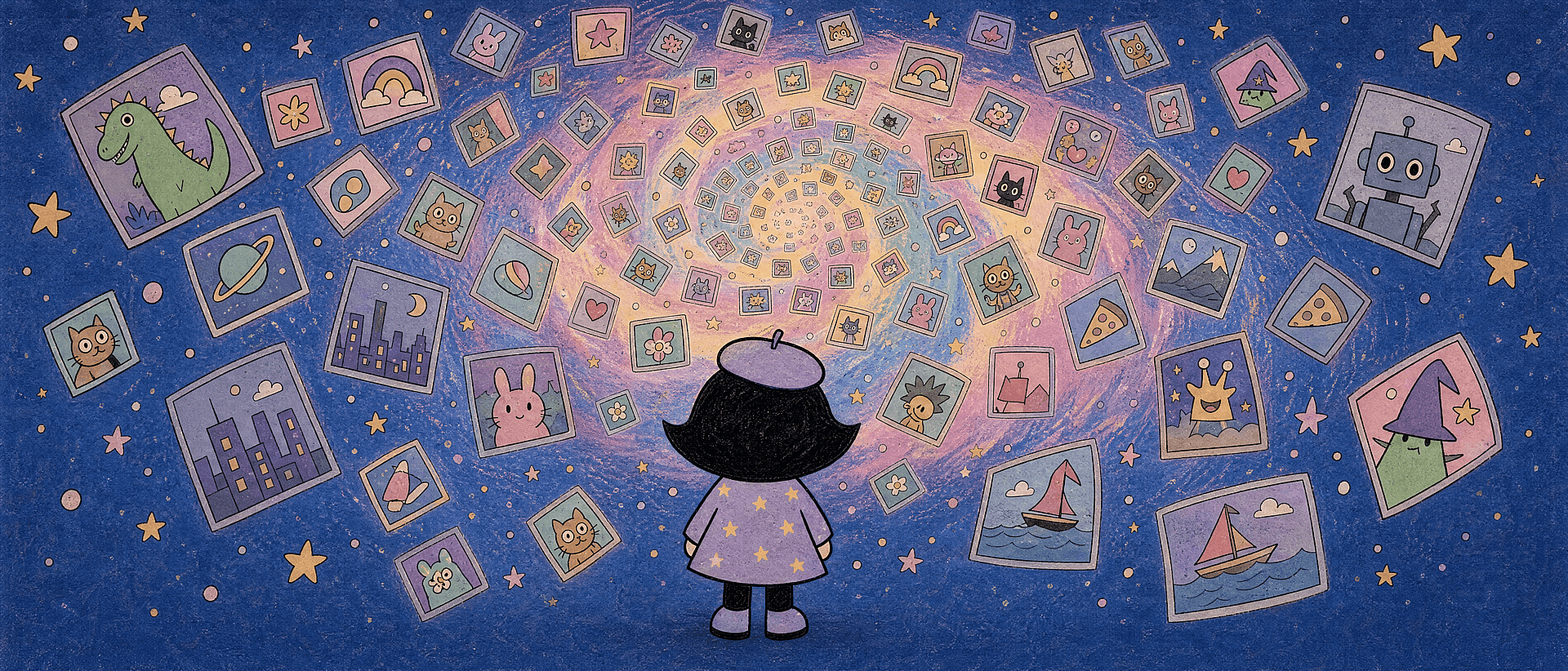
This is especially true in an era when the volume of available reference material is essentially infinite and the tools to generate more of it are equally unlimited. The challenge is no longer finding inspiration, it's maintaining the ability to refuse, edit, and curate. When everything is possible and everything is fast and the model will happily produce whatever you describe, the creative muscle that needs the most deliberate exercise is not imagination, but discernment. It's the voice that says "not that, not quite, not yet, keep going."
Developing that little voice requires paying close attention to your own reactions, especially the negative ones, and taking them seriously enough to articulate them in the creative process. Not just "I don't like this," but "I don't like this because the composition is too centered and the palette is trying too hard and the mood feels borrowed from something I've seen a hundred times." The specificity of the rejection is the data. Over time, that data coheres into a set of positions, and those positions are your point of view.
The practical version of this is simple: start keeping a rejection file alongside your reference library. Not screenshots of bad work, but screenshots of work that is technically accomplished, clearly professional, and somehow still not you: the kind of work you could imagine someone else making but that you would never make, and that you can articulate precisely why. Review it as often as you review your inspirations, because you'll learn more about your aesthetic from studying the conviction in your refusals than from studying your endlessly shifting enthusiasms.
A creative point of view is not a collection of things you love, but a set of positions you hold (and yes, positions require clear opposition.) The "yes" only means something in relation to the "no." The work that is most distinctly yours is the work that couldn't have been made by someone with a different set of refusals, and the way to get there is not to gather more inspiration but to get very clear, very specific, and very honest about what you won't do.
OpenArt's multi-model workspace is built for exactly this kind of discernment: the ability to generate at volume, move between tools, and keep selecting until what's left is genuinely yours. The tools are only as good as the eye directing them, and every time you say "no," the eye gets sharper & the creative voice gets louder.